The largest furniture trade show in the world, and you cannot buy anything at it
15 July 2026 · By Ray Denton
Twice a year the town fills with buyers. Almost nothing on display is for sale to the public, and that is the point.
A wholesale event, not a shop
People hear that the world's largest furniture market is held in a small North Carolina city and reasonably assume it is somewhere you go to buy a sofa. It is not. High Point Market is a wholesale trade event, held every April and October, where manufacturers show new lines to retail buyers, interior designers and the press. Attendance is credentialled. There is no consumer day.
The scale is difficult to convey. The showroom space runs to millions of square feet spread across dozens of buildings in the middle of the town, and for two weeks the population roughly doubles. Buildings that sit closed for most of the year open for the market and close again afterwards. The whole downtown is essentially a permanent exhibition hall with a five-month gap between uses.
What it does to the product cycle
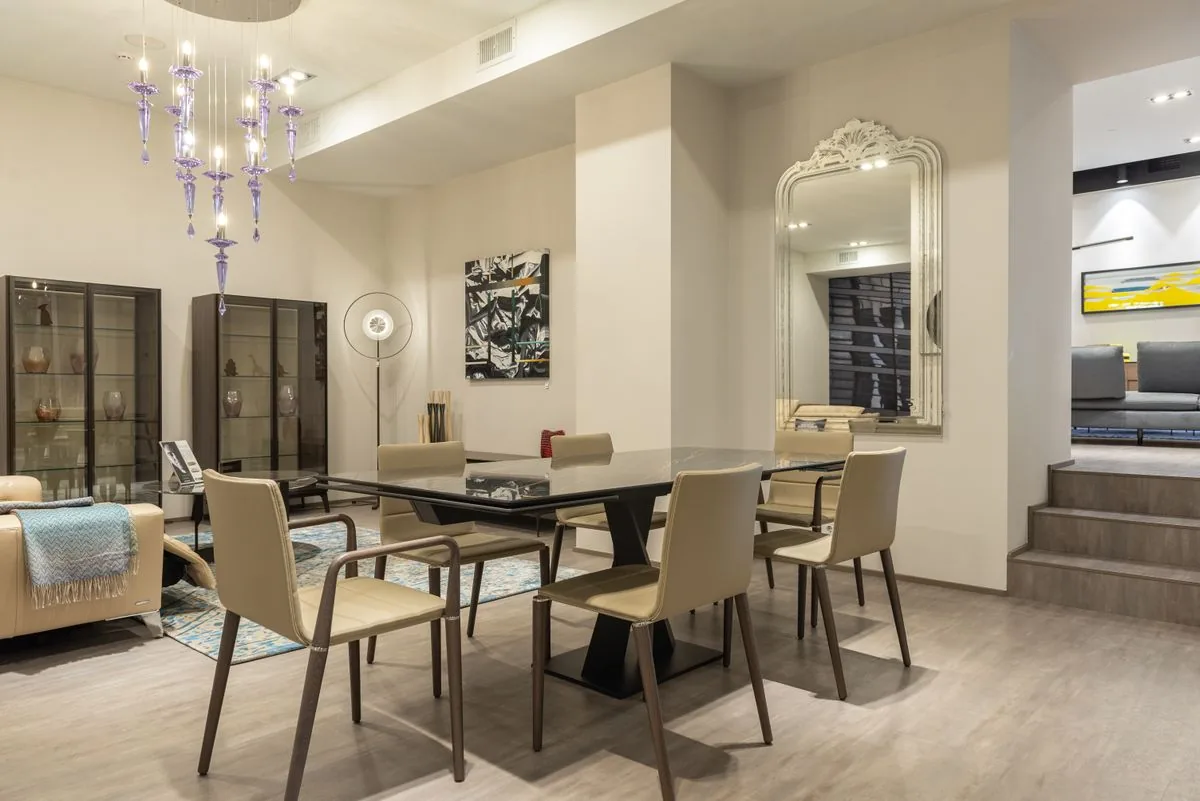
What matters to a buyer is what the event does to the product cycle. New collections are introduced at market. A retailer walks the showrooms, places orders, and those orders determine what appears on shop floors six to nine months later. So the sofa you are looking at in a showroom in March was almost certainly ordered from a showroom in High Point the previous October, from a sample that was made specifically to be seen under trade-show lighting by someone in a hurry.
That has two practical consequences. The first is that market samples are built to photograph and to be handled by hundreds of people over two weeks - they are not always identical to the production run that follows, and the differences tend to be in the places nobody inspects. The second is that the twice-yearly rhythm creates a genuine discounting cycle. Floor models get cleared to make room for the new lines, and the clearance is driven by a calendar rather than by demand, which is why the same piece can be substantially cheaper in one month than another.
Why the collection names sound like that
The market also explains something about how furniture is described. Trade shows reward differentiation, and after a certain point the meaningful differences between competing case goods are exhausted. What remains is language. A great deal of the vocabulary that ends up on a swing tag - the finish names, the collection names, the invented style categories - exists because a line needed to look distinct across an aisle from a competitor doing the same thing.
None of that means the event is theatre. The furniture on show is real, the orders are real, and the concentration of buyers in one place for two weeks genuinely does set the direction of a large part of the industry. It just does not do it for your benefit, and it is worth knowing that the collection names were written for a different audience than the one that eventually reads them.