Timber, water and a railway junction
17 June 2026 · By Ray Denton
Industries settle where three or four advantages happen to overlap. In the North Carolina piedmont they overlapped unusually well.
The forest, the rivers and the railway
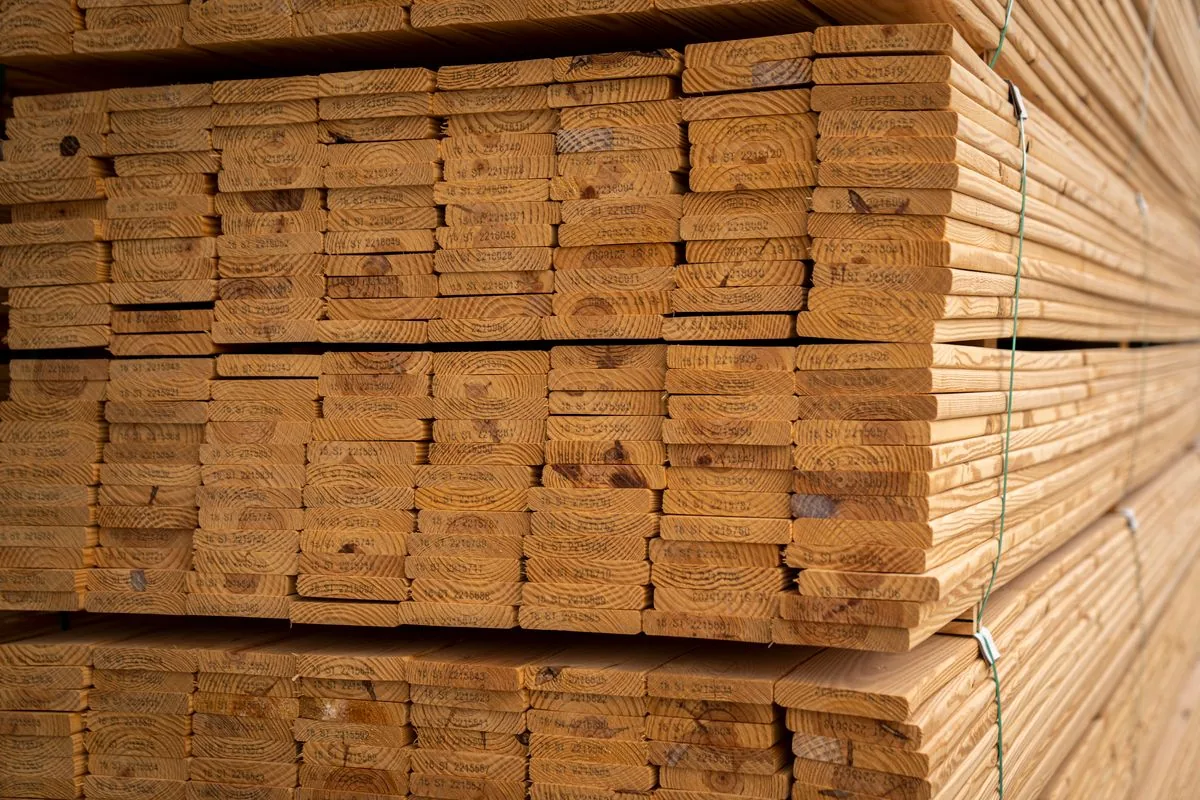
The first advantage was the forest. The southern Appalachian hardwood belt runs through the western half of the state, and it produced oak, walnut, cherry, maple and yellow poplar in commercial quantity within a short haul of the piedmont towns. Furniture is a bulky, low-density product made from a bulky, low-density raw material, so the cost of moving timber to the factory dominates the economics in a way it does not for, say, textiles. Building the factory next to the trees was not a preference. It was close to a requirement.
The second was power. The rivers coming off the Blue Ridge dropped fast enough to turn mill wheels, and later to carry the region's early electrical generation. Sawing and planing are power-hungry operations, and in the nineteenth century the price of power varied enormously by geography.
The third, and the one that actually decided the location, was the railway. A furniture factory needs to send finished goods out at least as much as it needs to bring timber in, and finished furniture is worse to ship than timber - it is fragile, it is mostly air, and it damages easily. The junction at High Point, where the North Carolina Railroad crossed the plank road, gave manufacturers a route to the northern cities where the money was.
Labour was the decisive cost
The fourth advantage was labour, and it is the one that is usually described too politely. The piedmont had a large agricultural population moving off the land, wages well below the northern furniture towns of Grand Rapids and Jamestown, and almost no union presence. Through the first half of the twentieth century that cost difference was the single largest reason a chair made in North Carolina could undercut the same chair made in Michigan.
Why the cluster mattered more than the trees
Once several factories were operating in the same few counties, the advantages compounded in a way that had nothing to do with timber or rivers. A supplier of drawer slides could survive by serving twenty factories within an hour's drive. A finisher, a veneer cutter, a hardware distributor, a specialist in carved detail - each of them needed a certain volume of work to exist at all, and the cluster provided it. A new factory opening in the area inherited that whole ecosystem on day one. A factory opening somewhere else had to build it or import it.
That is the part worth understanding, because it explains both the rise and the decline. The cluster was never really about the trees. By the middle of the twentieth century a great deal of the timber was arriving from outside the state anyway. It was about the density of skills and suppliers, which is much harder to build than a factory and much easier to lose.