A furnished room and a finished room are not the same thing
26 August 2026 · By Ray Denton
The furniture is bought, delivered and placed, and the room still reads as unresolved. It is almost always the same cause.
The whole purchase happens below waist height
Everything discussed so far in this guide happens below waist height. Sofas, tables, chests, beds - the entire furniture purchase occupies the lower third of a room's volume. When the delivery has gone and the pieces are placed, the walls above them are usually exactly as they were, and the eye reads that as incomplete even when nobody can say why.
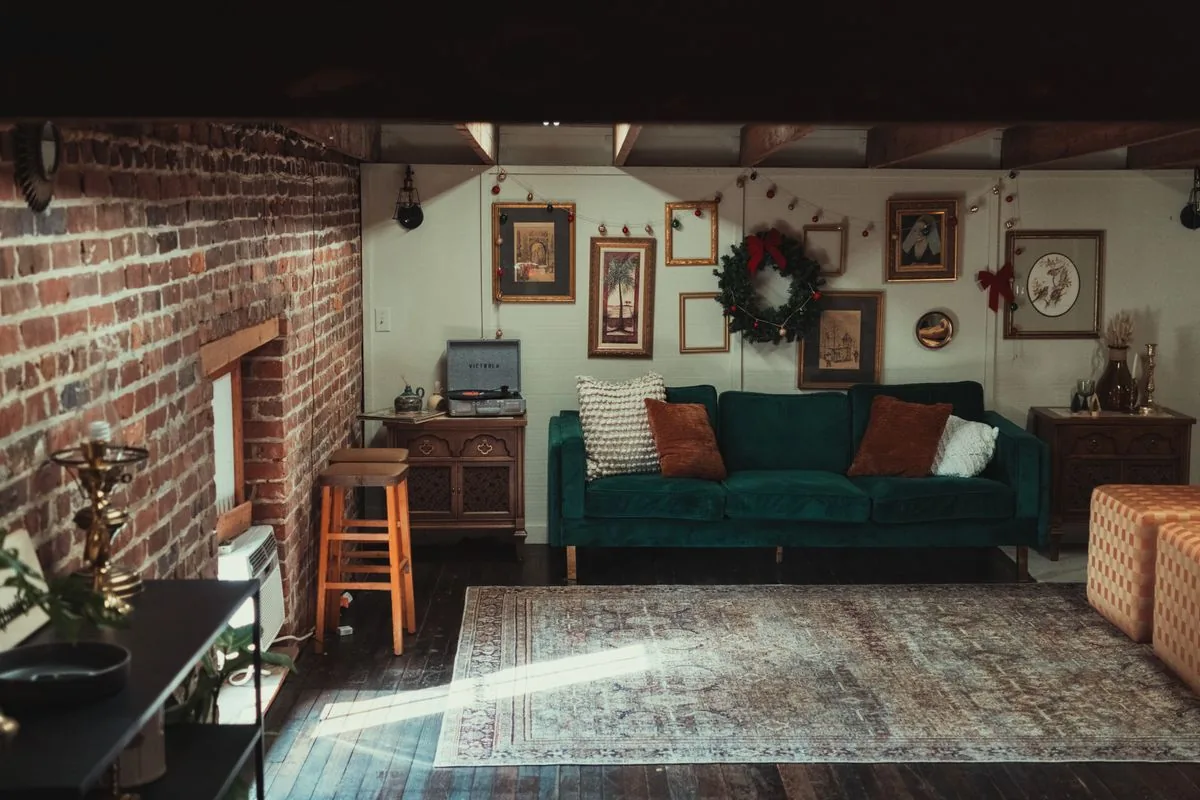
The wall above a sofa is the most conspicuous instance, because a sofa is a long low horizontal object that creates a large, obvious rectangle of empty wall directly above it. In a photograph of a room that looks finished, that rectangle is nearly always occupied by something. In a photograph of a room that looks unfinished, it nearly always is not.
The three measurements
The measurements are more forgiving than people fear, and there are only three. The piece above a sofa should span roughly two thirds to three quarters of the sofa's width - this is where most rooms go wrong, because a piece chosen at eye level in a shop looks far larger there than it will on a wall behind a three-seater. The bottom edge should sit about 15cm to 25cm above the back of the sofa, close enough that the two read as one composition rather than as two separate objects. And the centre should land at roughly 145cm to 150cm from the floor, which is standing eye level and the reason gallery hangs feel comfortable.
One large piece beats an arrangement of small ones
One large piece is easier to get right than an arrangement of small ones, and it is the safer choice if you would rather not spend an afternoon with paper templates. If a single canvas or framed print is not what the room wants, a pair hung at the same height, or a row of three at even spacing, gives the same visual mass with a little more movement. What does not work is one small item floating in the middle of a large wall, which draws attention to the emptiness rather than filling it. When we needed to solve exactly this wall in a test room, a large framed print above the sofa did more for the room than any further furniture would have, and it cost a fraction of a side table.
It does not have to be art
Art is the usual answer but not the only one. A mirror works particularly well opposite a window and adds light rather than pattern. A single large-scale textile has an effect on the acoustics of a hard room that is genuinely noticeable. Shelving works if it is treated as one horizontal band rather than as storage. The requirement is not decoration for its own sake - it is that the vertical plane needs mass at roughly the height the eye rests, in scale with the furniture underneath it.
The last stage, and the one most often skipped
This is the last stage of furnishing a room and the one most often left indefinitely, usually because it feels optional in a way that a sofa does not. It is worth doing shortly after the furniture arrives rather than years later, because it is the step that makes everything bought before it look deliberate.