You are buying a frame you will never see
29 July 2026 · By Ray Denton

Upholstery hides its own construction completely. Everything that determines whether a sofa lasts is underneath the fabric.
Three systems, only one of them visible
A sofa is three systems doing different jobs: a frame that holds the shape, a suspension that carries the weight, and a cushion that provides the comfort. Only the third is apparent in the shop, and it is the one that matters least, because cushions can be replaced and frames cannot.
The frame, the suspension and the foam
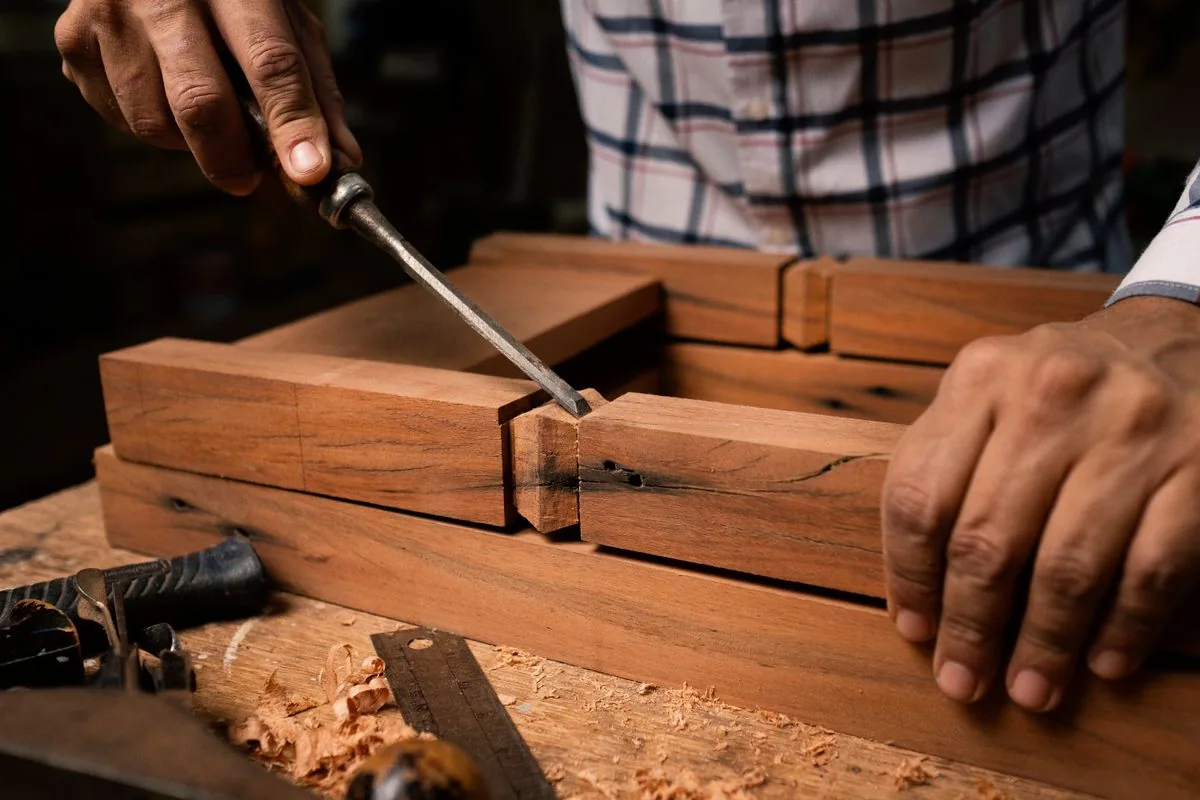
The frame. The phrase to listen for is kiln-dried hardwood. Kiln drying removes moisture under control before the timber is cut, so the frame does not warp or shrink after it is built and upholstered - a green or air-dried frame can shift enough to loosen every joint in it. Corners should be blocked and screwed rather than only stapled, and the better makers will say so unprompted. Plywood is entirely legitimate in a frame, particularly in the panels; particleboard is not, because it does not hold a screw under repeated load.
The suspension. Eight-way hand-tied springs are the traditional benchmark: coil springs tied by hand in eight directions so each one is linked to its neighbours and the whole deck moves together. It is labour-intensive and it is excellent, though it is not the only good answer. Sinuous springs - continuous serpentine wire running front to back - are the mainstream approach and, in decent gauge with enough of them, they last well. Webbing alone, without springs, is fine on a lightly used occasional chair and inadequate on the sofa a family sits on every evening.
The cushions. Ask for foam density rather than firmness; the two are different and only one predicts longevity. Higher-density foam holds its shape for years, low-density foam feels identical in the showroom and flattens within eighteen months. A down or fibre wrap over a foam core gives the softer look, at the cost of needing to be plumped.
The checks you can do yourself
The checks you can perform yourself take about a minute. Lift one front corner a few inches off the floor: the opposite front leg should come up more or less with it, showing the frame is rigid. If the frame twists and only the lifted corner rises, the structure is flexing. Sit down heavily near an arm and listen for creaking. Push down on the arm itself and feel whether there is a solid frame under the padding or just a compressible mass. Lastly, look underneath - a dust cover is normal, but a manufacturer confident in the frame will often leave the construction visible.
Fabric is a separate, reversible decision
Fabric is a separate decision and a reversible one. A sofa can be reupholstered several times over its life, and on a good frame that is worth doing. On a stapled particleboard frame it never is, which is really the whole argument for paying attention to the part you cannot see.