Three checks, ninety seconds, no tools
2 September 2026 · By Ray Denton

If you do nothing else in a showroom, do these. They are quick, they are unambiguous, and they are the ones staff expect least.
One: pull a drawer out and turn it over
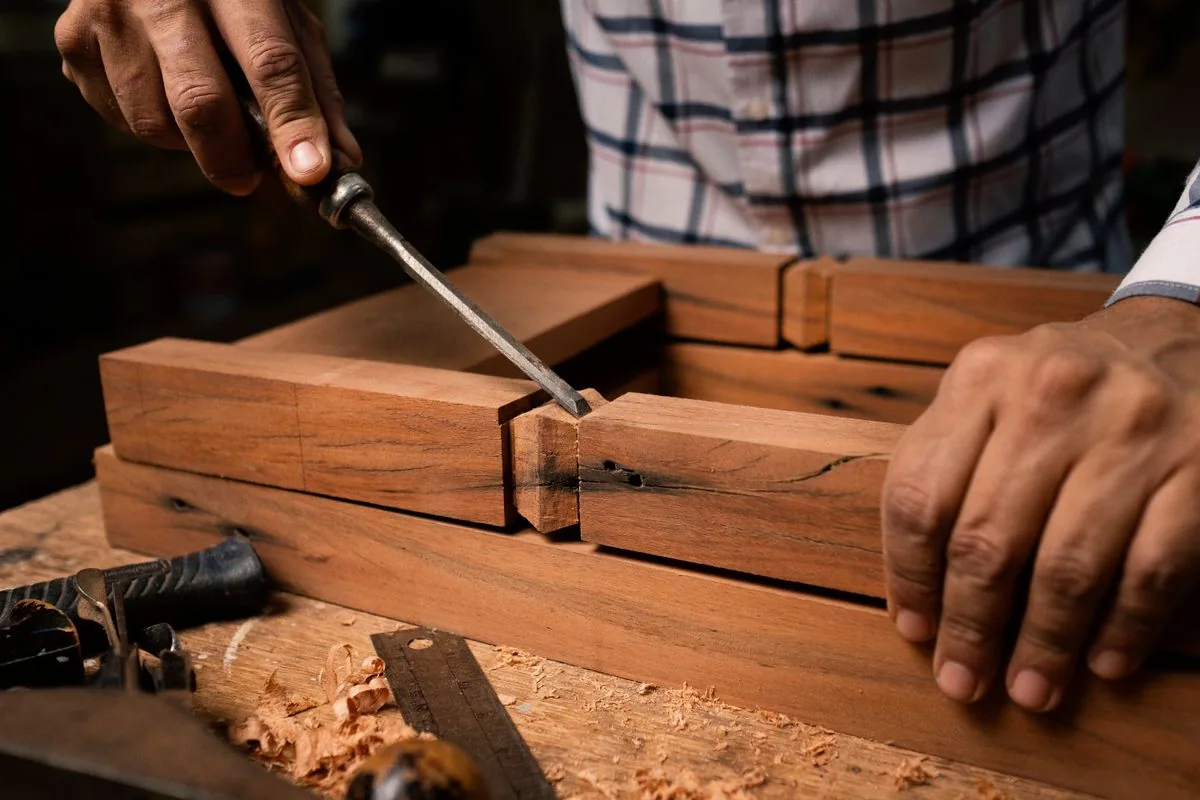
You are looking at two things. At the front corners, how the sides are joined to the front - an interlocking joint of some kind is good news, staples through a butt joint are not. Underneath, how the bottom panel is held: sitting in a groove cut into the sides is right, stapled onto the underside is not. Then look at where the drawer came from. A horizontal panel between one drawer and the next, called a dust panel, means the case has been built as a structure rather than as a box with shelves in it.
Two: press down on a top corner
Put one hand flat on the corner of a table, dresser or chest and lean some weight onto it. The piece should not rock, twist or creak. A rack in the frame under hand pressure in a showroom is a rack that will get worse under years of household use, and it usually means the joints are relying on fasteners rather than on joinery. On a dining table, do it at the corner furthest from a leg.
Three: look at the back
Pull the piece away from the wall if you can. A back panel that is a solid sheet, set into a groove and screwed or nailed at intervals, is a structural component that keeps the case square. A thin fibreboard panel stapled flush to the rear edges is a dust cover. Both look identical from the front, and they behave completely differently after five years of being pushed across a carpet.
Why these three
Those three cover a surprising amount of ground because they each test a different thing: the quality of the small joinery, the rigidity of the frame, and whether the case was engineered as a box. A piece that passes all three was built by people making decisions about longevity. A piece that fails all three was built to a price, which is not automatically wrong - it is just important to know which one you are paying for.
Two things that are not on the list
Two things that are not on the list. Weight is not a reliable signal: particleboard is heavier than many hardwoods, so heft can indicate the opposite of what people assume. And the warranty length tells you about the manufacturer's returns data and marketing position, not about the construction. A long warranty on a stapled drawer is a bet that you will not claim.
One courtesy
One courtesy. Showroom staff do not mind any of this, and the good ones will help - a salesperson who is comfortable with you turning a drawer over is usually a salesperson selling something that survives being turned over.